
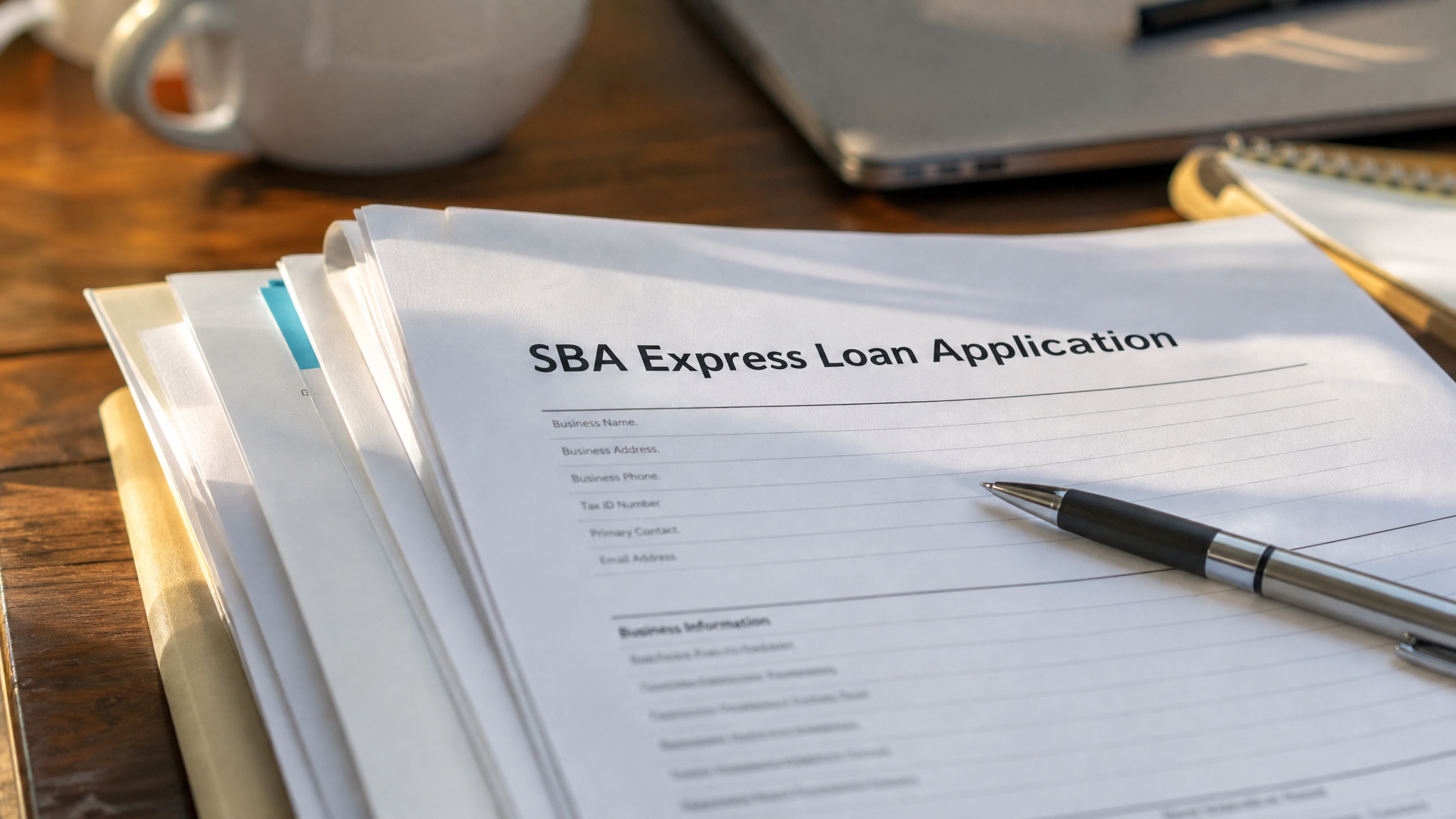
SBA Express Loans: A Guide to Small Business Loans
When a small business owner needs capital quickly, wading through a months-long loan process can kill momentum. SBA Express loans exist precisely to solve that problem — delivering government-backed financing with a significantly faster decision window than traditional SBA routes. This guide breaks down how they work, who qualifies, what they cost, and how to find the right lender.
What Are SBA Express Loans
How SBA Express Fits Into the 7(a) Program
The SBA 7(a) loan program is the federal government's primary vehicle for backing small business loans, and SBA Express is its streamlined sibling. Rather than requiring the SBA to review every application in detail, Express delegates more underwriting authority to approved lenders, which allows the SBA to issue a credit decision — yes or no — within roughly 36 hours of submission.
That speed comes with a tradeoff. The SBA guaranty on Express loans sits at 50% of the loan amount, compared to up to 85% on smaller standard 7(a) loans. Lenders take on more risk, but they gain the flexibility to move faster and use their own established underwriting processes.
Loan amounts max out at $500,000, which covers a broad range of business needs without venturing into the territory where a larger, more complex 7(a) application would be necessary.
Typical Use Cases
SBA Express funds are flexible. Businesses most commonly use them for working capital to cover payroll or inventory gaps, equipment purchases, business expansion, and refinancing eligible existing debt. The program is not designed for real estate acquisitions — standard 7(a) or SBA 504 loans tend to be better fits there — but for operational and growth needs under $500,000, Express hits a practical sweet spot.
Eligibility and Who It's Best For
Basic Qualifications
The SBA sets the baseline requirements, and lenders add their own criteria on top. To qualify, a business must operate for profit within the United States and meet SBA size standards, which vary by industry but generally cap annual revenue or employee count at defined thresholds. Owners must demonstrate reasonable personal credit — most lenders want a score of at least 650, though stronger scores improve terms — and they must have invested meaningful equity in the business rather than relying entirely on borrowed capital.
Certain industries are ineligible outright: speculative investments, passive income properties, gambling, and a handful of others are off the table by SBA policy. Individual lenders may also layer on their own restrictions or requirements, so a borrower who gets declined at one institution should not assume they're universally disqualified.
Startups vs. Established Firms
Getting an SBA loan for new business is possible through the Express program, but it requires more preparation. Lenders scrutinize startups far more closely because there's no operating history to validate projections. Expect to document relevant industry experience, provide detailed financial projections supported by market research, and demonstrate collateral wherever possible.
Established businesses with two or more years of tax returns, consistent revenue, and demonstrated debt service capacity tend to move through underwriting more smoothly. They're the profile SBA Express is most naturally designed to serve — businesses with a clear, specific need and the track record to back it up.
Rates, Terms, and Fees
Interest and Maturity
SBA Express loans carry variable interest rates tied to the Prime Rate plus a lender markup, all within caps the SBA establishes. As of recent SBA guidelines, lenders can charge up to Prime plus 6.5% on loans under $50,000, with lower markups allowed on larger amounts. Because rates are variable, monthly payments can shift over time, which matters for long-term cash flow planning.
Maturity terms follow standard 7(a) rules. Working capital and equipment loans typically run up to 10 years. Real estate, when permitted under the Express structure, can extend further, though borrowers with property-heavy needs often find better terms elsewhere in the SBA portfolio.
Costs to Expect
Fees are a real part of the total cost calculation. SBA guaranty fees apply to the guaranteed portion of the loan and scale with loan size — smaller loans under $150,000 are currently exempt from guaranty fees under certain SBA policies, while larger balances carry fees that can reach into the thousands. Lenders may also charge origination or packaging fees, and some loans include prepayment penalties if paid off early during the first few years.
Running numbers through an SBA loan calc before committing to an offer is worth the effort. Even a half-point difference in rate or a variance in fees can meaningfully shift the true cost over a 7- or 10-year term. Several lenders and third-party financial sites offer free SBA loan calc tools that let you compare payment scenarios side by side.
Application Process and Timeline
Documentation Checklist
The paperwork for SBA Express is lighter than a full standard 7(a) application, but it still requires organization. Core documents typically include SBA Form 1919 (borrower information), three years of business and personal tax returns, current financial statements (balance sheet and profit and loss), a schedule of existing debts, and a business plan with financial projections if the business is newer or the use of funds is less conventional.
Getting these materials together before approaching a lender accelerates the process considerably. Gaps in documentation are the single most common cause of delays.
Speed and Funding
The 36-hour SBA decision window is real, but it covers the SBA's credit decision — not the full path to cash in your account. After approval, lenders still need to finalize terms, gather closing documents, handle any real property or collateral work, and wire funds. Realistically, plan for two to six weeks from application to funding, depending on complexity and lender efficiency.
Most SBA express lenders have moved to online portals for document upload and status tracking, which speeds things up and gives borrowers visibility into where their file stands. One clarification worth making: the term "SBA loan log in" often refers to the SBA's direct disaster loan portal. For the 7(a) Express program, there is no SBA borrower login — your primary access point is your specific lender's system.
How to Choose SBA Express Lenders
Comparing Lenders
Not all lenders are created equal within the Express program. SBA Preferred Lender Program (PLP) participants have delegated authority to approve loans without waiting for SBA review on every file, which compresses timelines further. Lenders with high Express volume tend to have tighter, more efficient processes because they run these loans regularly.
Compare lenders on turnaround time, fee transparency, closing efficiency, and responsiveness during the application phase. A lender who takes three days to return a call during underwriting will likely do the same at closing.
Questions to Ask
Before choosing a lender, ask directly about their Express approval rates, what collateral they typically require at various loan sizes, and whether they offer revolving lines of credit through the Express or Export Express structure — not all do. Ask about their typical time from application to funding for deals similar to yours.
The SBA's Lender Match tool is a practical starting point for identifying active SBA express lenders in your region and industry. Cross-reference any match with online reviews and Better Business Bureau ratings before sharing financial documents.
Alternatives If Express Isn't a Fit
Other SBA Options
SBA Express works well within its lane, but it isn't right for every situation. Standard 7(a) loans accommodate amounts above $500,000 and carry the higher 85% guaranty on smaller balances, which can matter if you need more leverage. SBA Microloans top out at $50,000 and are distributed through nonprofit intermediaries — a strong option for very small SBA loans funding early-stage or underserved businesses. CAPLines, another 7(a) variant, provides revolving credit structures better suited to businesses with cyclical cash flow needs.
Non-SBA Paths
Bank term loans and business lines of credit remain valid options, especially for well-qualified borrowers who prioritize speed over rate. Online small business loans from fintech lenders can fund in days but typically carry significantly higher interest rates, sometimes reaching 30% or more on an annualized basis. That cost matters at scale.
Whatever path you're evaluating, use an SBA loan calc to model total repayment under each scenario. Monthly payment comparisons can be misleading — total interest paid over the life of the loan often tells a more accurate story about which option actually fits your business financially.