
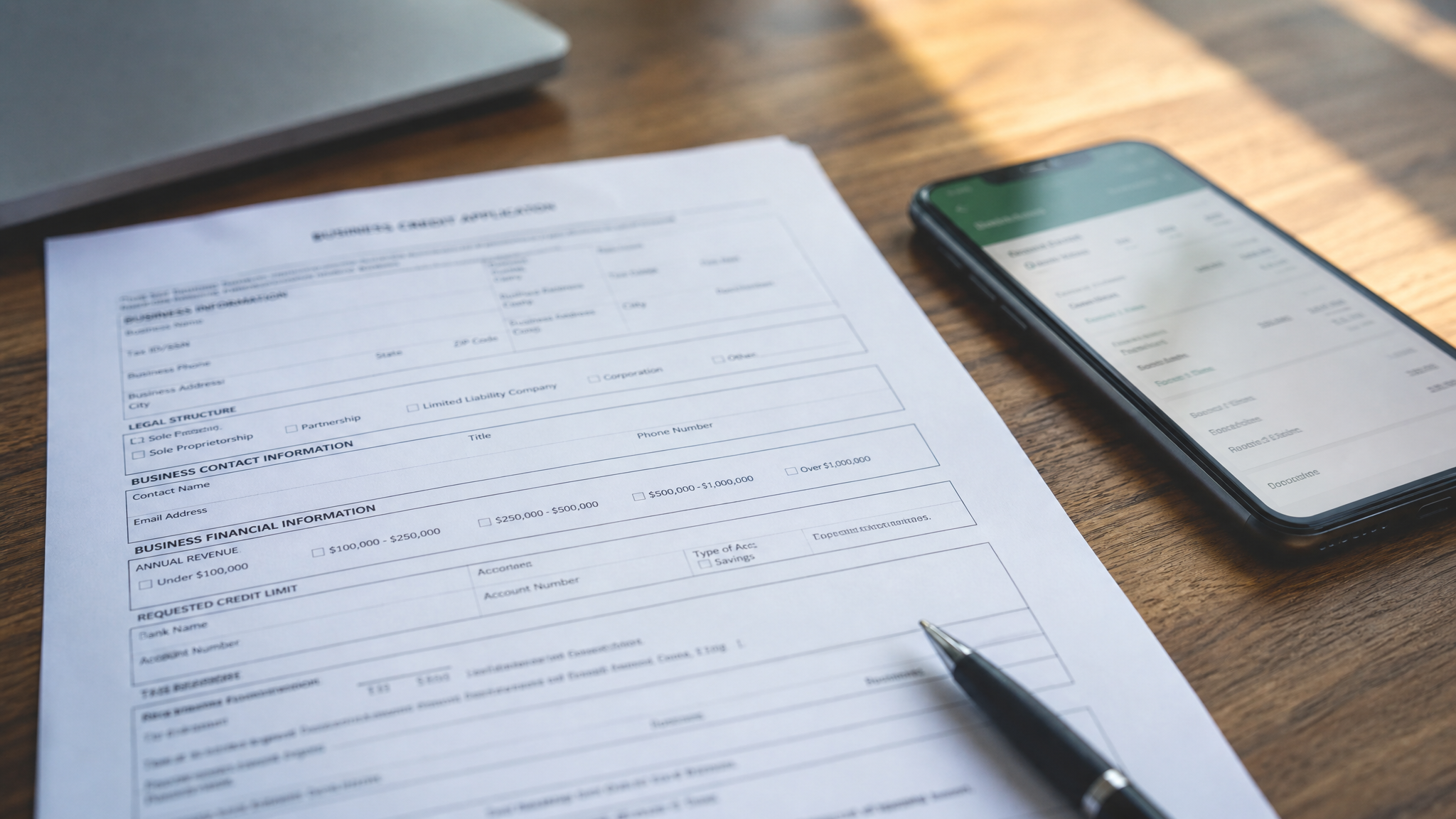
How to Build Business Credit and Start a Business Line of Credit
What a Business Line of Credit Is and Why It Matters
A business line of credit is revolving financing — you draw funds, repay them, and draw again as needed. Unlike a term loan that delivers a lump sum, a line gives you on-demand access to capital up to an approved limit. That flexibility makes it one of the most practical tools a business owner can hold.
Cash flow is rarely perfectly smooth. Payroll falls due before a client pays an invoice. A supplier offers a discount for bulk inventory you can't quite cover. A line of credit fills those gaps without forcing you to take on more debt than you actually need. Used responsibly, it also builds your business credit profile — which lowers borrowing costs over time and opens doors to larger financing.
There's another underappreciated benefit: separating personal and business finances. When your business has its own credit profile, routine purchases and short-term expenses stop pulling on your personal score. A well-managed line often carries lower rates than business credit cards, making it a cost-efficient option when you pay down draws quickly.
Eligibility: What Lenders Look For Before Approval
Lenders want evidence that your business generates consistent revenue and operates like a legitimate company. Time in business matters — most conventional lenders want to see 12 to 24 months of operating history, though some online lenders will work with businesses as young as six months. Monthly revenue thresholds vary, but $10,000 to $15,000 per month is a common floor.
Your business bank account tells a story. Lenders scrutinize average daily balances, deposit consistency, and the frequency of non-sufficient funds events. A single overdraft won't sink an application, but a pattern of them signals cash management problems.
Structural basics count too. An EIN, a registered legal entity, active licenses, and business information that matches across the Secretary of State, IRS, bank, and vendor records — inconsistencies here raise red flags. Lenders also pull personal credit (most require a score of 620 or higher, with better terms above 680) and increasingly check business credit scores through Dun & Bradstreet, Experian Business, and Equifax Business. Outstanding liens, open UCC filings from other lenders, or past-due obligations can stall or kill approval.
Step-by-Step: How to Build Business Credit Before You Apply
Set Up Your Business Profile
The foundation starts with legal structure. Form an LLC or corporation, obtain an EIN from the IRS, and open a dedicated business checking account under your company's legal name. Every registration point — Secretary of State filings, your bank, your vendors, your website — should list identical name, address, and phone information. Discrepancies fragment your credit profile.
Next, claim your D‑U‑N‑S Number through Dun & Bradstreet. It's free and activates your D&B file, which is one of the three primary business credit bureaus alongside Experian Business and Equifax Business. Activating all three files is essential because different lenders check different bureaus.
Establish Tradelines and Payment History
Payment history is the largest driver of business credit scores. Net-30 vendor accounts — suppliers that extend 30-day payment terms and report to the bureaus — are your fastest path to positive history. Companies like Uline, Quill, and Grainger are commonly used starting points. The strategy is straightforward: buy what you'd purchase anyway, pay early, and let the reported history accumulate.
Aim for at least three to five reporting tradelines within your first year. A business credit card that reports to business bureaus can supplement vendor accounts and adds another data point.
Monitor and Optimize Your Scores
Pull your business credit reports quarterly. Errors appear more often than most business owners realize — incorrect payment dates, wrong company information, duplicate entries. Dispute inaccuracies directly with the bureau. Keep utilization below 30% across revolving accounts, and never let a payment go past due. Consistent, on-time behavior over six to twelve months produces meaningful score improvement.
How to Start a Business Credit Line: The Application Process
Where to Apply: Banks, Online Lenders, and Credit Unions
Knowing how to start a business credit line means knowing where to look. Traditional banks typically offer the lowest APRs (often 7% to 15%) and higher limits, but their underwriting is stricter and slower. Online lenders like Bluevine or Fundbox move faster — sometimes same-day decisions — but rates run higher. Credit unions occupy a middle ground: competitive rates, relationship-driven underwriting, and more flexibility for younger businesses.
Compare lenders on credit limits, APRs, draw fees, maintenance fees, and whether they report positive behavior to business credit bureaus. That last point matters if building credit is part of your goal.
What to Prepare: Docs and Data
A complete application moves faster and signals professionalism. Gather 6 to 12 months of business bank statements, profit and loss statements, a balance sheet, two years of business tax returns, and accounts receivable and payable aging reports. You'll also need government-issued ID and potentially a voided business check.
Secured vs. Unsecured Lines
Unsecured lines require no collateral but demand stronger credit and cash flow. Secured lines — backed by cash deposits, inventory, or receivables — are easier to qualify for if you're building credit or have a thin file. Many business owners start with a secured line, use it responsibly for 12 months, and then convert to an unsecured facility with a higher limit. Most lenders will still require a personal guarantee, especially for businesses under two years old.
Submit a complete application and respond to underwriting requests within 24 to 48 hours. Slow responses can stall approval or push you to the back of the queue.
Boost Approval Odds, Credit Limits, and Terms

Several moves improve your position before and during the application. Increase your average daily bank balance — even by a few thousand dollars — in the 60 to 90 days before applying. Pay down existing revolving debt to push utilization below 30%. Ensure your financial statements are current and reflect positive trends; a lender seeing three consecutive months of revenue growth reads that differently than flat or declining numbers.
Relationship banking still works. Meeting with a business banker, consolidating deposits at one institution, and maintaining a history there gives a loan officer context that numbers alone can't provide. If your credit profile is thin, offering collateral or a cash security deposit can unlock larger limits and lower rates without waiting another year to build history.
Costs, Terms, and Smart Ways to Use Your Line
APR is only one piece of the cost picture. Draw fees (often 1% to 2% per draw), monthly maintenance fees, and early repayment penalties can add up. Read the agreement before signing, and pay attention to any financial covenants — minimum revenue thresholds or restrictions on taking on additional debt.
The smartest use of a line of credit is short-term, ROI-positive needs: covering a payroll gap that closes when a receivable clears, buying inventory for a confirmed order, or funding a marketing push with a predictable return. Using a revolving line to fund long-term assets or ongoing operating losses creates a debt spiral. Pay down each draw as quickly as possible to minimize interest and keep utilization low.
Watch for cash advance fees if your line allows ATM withdrawals — those are expensive. Confirm that your lender reports positive repayment behavior to the bureaus; not all do, and if building credit is a goal, that reporting is part of what you're paying for.
If You're Declined: Alternatives and Next Steps
A decline isn't a dead end. Ask the lender specifically why — the reason determines your next move. If cash flow is the issue, invoice financing or equipment financing may bridge the gap while you strengthen your profile. SBA CAPLines are a government-backed option worth exploring for businesses that meet eligibility requirements. Community development financial institutions (CDFIs) often work with businesses that conventional lenders pass on.
Business credit cards that report to business bureaus function similarly to a line and help build credit history in the meantime. Add more net-30 vendor accounts, make every payment on time, and revisit the question of how do you get a business line of credit after 90 days of documented improvement. Lenders want to see momentum — stronger bank balances, lower utilization, and cleaner records will produce a different outcome on reapplication.