
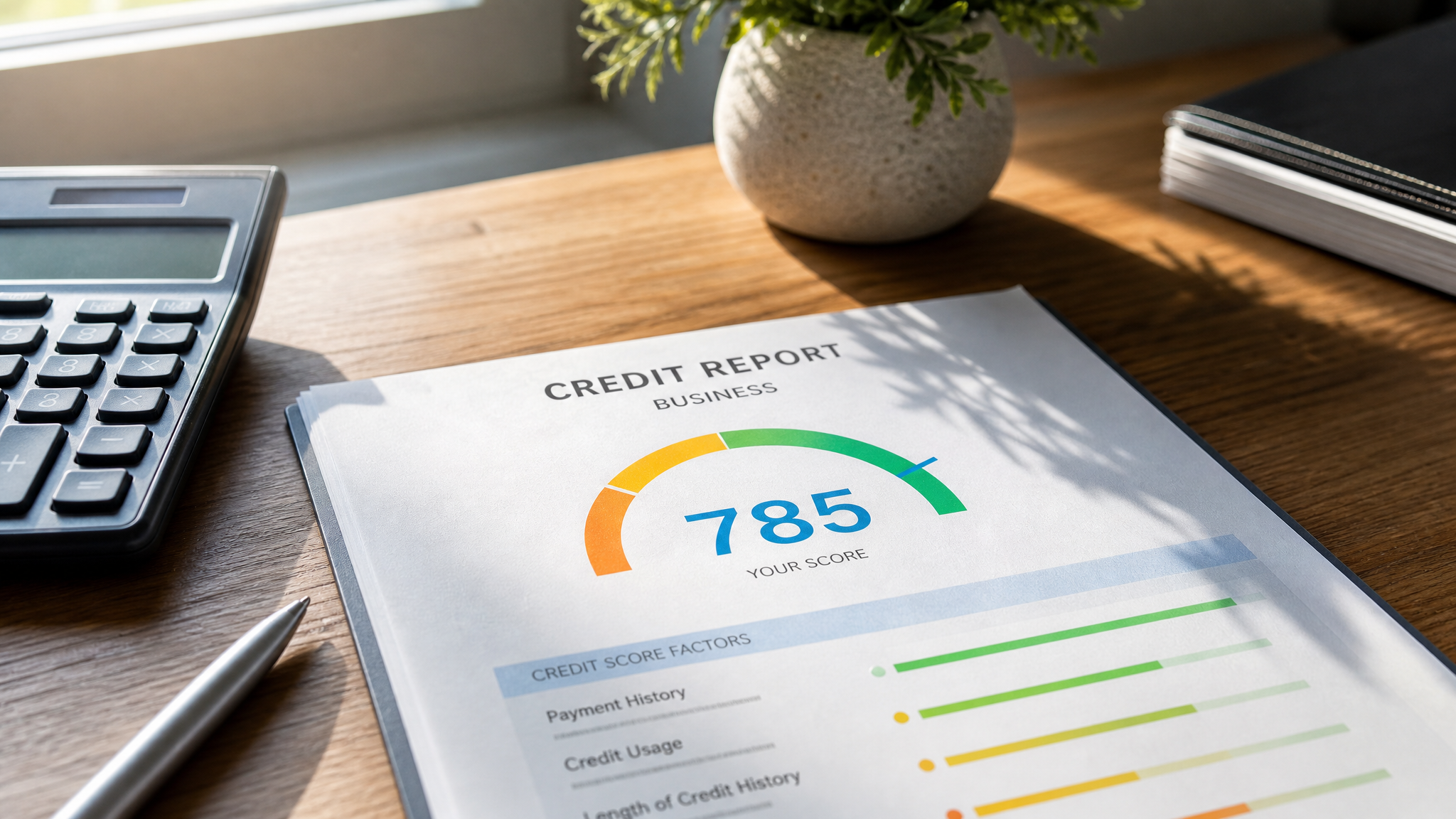
How to Build Business Credit: A Step-by-Step Guide
Building business credit is one of the most valuable—and most overlooked—steps a company can take to secure its financial future. Strong business credit opens doors to better loan terms, higher credit limits, and supplier relationships that would otherwise be out of reach. Yet many business owners either skip it entirely or assume their personal credit score will carry them through. It won't, and the gap that creates can cost you real money.
What Is Business Credit and Why It Matters
Business credit reflects your company's borrowing and payment history, completely separate from your personal finances. Lenders, suppliers, and even potential partners use it to gauge financial reliability before extending terms or capital.
How Business Credit Differs from Personal Credit
Personal credit ties to your Social Security Number and follows you individually. Business credit ties to your Employer Identification Number (EIN) and follows the company. That distinction matters enormously—when business credit is strong, you can often access financing without personally guaranteeing the debt, which protects your personal assets.
Stronger scores also translate directly to lower financing costs. A company with an excellent business credit profile might secure a line of credit at 7% while a company with thin or poor credit pays 18% or more. The difference compounds fast.
Where Lenders and Vendors Get Your Business Credit Data
Three major bureaus track business credit data: Dun & Bradstreet (D&B), Experian Business, and Equifax Business. Each uses its own scoring model. D&B's PAYDEX score runs from 1 to 100, with scores above 80 considered strong. Experian's Intelliscore and Equifax's Business Credit Risk Score follow similar logic. Lenders may pull from one or all three, so building history across each bureau matters.
Lay the Foundation: Set Up a Legitimate Business Profile
Before you can build business credit, the business itself needs to look legitimate on paper. Skipping this step is the single most common reason applications get denied and scores fail to materialize.
Forming an LLC or Corporation
Register as an LLC or corporation—not a sole proprietorship. This legal separation creates the entity that will carry its own credit identity. File for an EIN through the IRS immediately after formation; this number functions as your business's Social Security Number for credit purposes.
Once you have your EIN, open a dedicated business bank account. Keep all business transactions flowing through that account exclusively. Get a business phone number and use a physical business address, even if you're home-based. These details signal stability to bureaus and lenders alike.
Create Consistent NAP Data Across Listings
NAP stands for Name, Address, and Phone—three data points that must match exactly across every directory, invoice, and application you submit. If your bank records show "Haze Tech Solutions LLC" but your Google Business Profile says "Haze Tech," the inconsistency creates confusion in bureau databases and can fragment your credit file. Standardize this information from day one and audit it regularly across platforms like Yelp, the Better Business Bureau, and industry-specific directories.
Secure all required local and state business licenses before applying for credit. Missing licenses can trigger automatic denials, and multiple denials in a short window can damage your profile before you've even started building it.
Establish Credit Files and Numbers
Get Your D‑U‑N‑S Number
A D-U-N-S Number is D&B's unique identifier for your business, and it's the gateway to a PAYDEX score. Apply for one free through D&B's website. The process typically takes 30 business days for the free path, though D&B offers expedited options if you need it faster.
Once the number is assigned, verify that your company data—legal name, address, industry code—is accurate. Errors here affect every score D&B calculates for you going forward.
Check Experian and Equifax Business Profiles
Search for your business on Experian Business and Equifax Business. A profile may already exist based on public records. If so, claim it and correct any errors. If not, you'll need to add trade references and establish activity to trigger file creation. Confirm that your SIC or NAICS industry codes are correct, since some lenders filter by industry when making decisions.
Where either bureau allows it, submit trade references—vendors or suppliers who can confirm positive payment history—to seed your initial profile.
Start Building: Vendor Accounts and Starter Credit

With your legal foundation in place and your bureau files open, you're ready to start generating actual credit history. This is where how to build credit for an LLC gets concrete and actionable.
Net-30 Vendors That Report
Open three to five net-30 vendor accounts with suppliers that report payment activity to the major bureaus. Well-known examples include Uline (office and shipping supplies), Grainger (industrial supplies), and Quill (office products). Purchase something small from each—enough to generate an invoice—and then pay it 10 to 15 days before the due date. That early payment behavior is what drives a high PAYDEX score. Paying on time is good. Paying early is better.
Business Secured and Starter Cards
Once you have a few vendor accounts reporting, apply for a secured business credit card or a starter business card that reports under your EIN rather than your SSN. Keep balances low from the start. The goal at this stage isn't spending power—it's generating positive payment history across multiple account types. Avoid personal guarantees when you can, though in the early stages some level of personal guarantee may be unavoidable. As your profile strengthens over 12 to 24 months, revisit those accounts and request terms that no longer require it.
Use Credit Strategically to Increase Your Score
Getting accounts open is only half the work. How you manage them determines whether your score climbs or stalls. This is the engine behind how to grow business credit consistently over time.
Payment Habits and Utilization
Pay every bill early—not just on time. On the PAYDEX scale, paying even one day before the due date scores higher than paying exactly on time. Set calendar reminders or automate payments where possible so nothing slips.
On revolving accounts, keep utilization under 30% at a minimum, and under 10% if you can manage it. High utilization signals financial strain regardless of whether you make payments on time. If a card has a $10,000 limit, carrying a $1,000 balance is safer than carrying a $4,000 balance.
Credit Mix and Aging
Bureaus reward diversification. A profile that shows vendor credit, revolving card accounts, and an installment loan—like an equipment financing agreement—demonstrates broader creditworthiness than a single account type. Build toward that mix deliberately over time.
Space out applications at least 60 to 90 days apart to limit hard inquiries. Multiple inquiries in a short window flag potential financial stress, even when no actual stress exists.
Monitor, Maintain, and Fix Issues
Building business credit isn't a one-time project. Keeping the score healthy requires ongoing attention.
Ongoing Monitoring
Enroll in monitoring services through D&B, Experian Business, or Equifax Business, or use a consolidated dashboard that pulls from all three. Check for changes monthly. Scores can shift based on account age, new inquiries, or data updates from vendors, and catching issues early is far easier than correcting months of damage after the fact.
Renew all business licenses on schedule and keep public records clean. Tax liens, judgments, and UCC filings all appear in bureau data and can crush scores overnight.
Disputes and Errors
When you find inaccurate data, dispute it immediately with documentation. Each bureau has a formal dispute process, and supplying invoices, bank statements, or contracts speeds resolution. A single erroneous late payment can shave significant points off a PAYDEX score—getting it corrected is worth the effort.
Review your score factors quarterly. Understanding which specific elements are holding your score back tells you exactly where to focus next, whether that's reducing utilization, adding a new account type, or aging an existing file. That kind of targeted approach is how to build your business credit score in a way that compounds over time rather than plateauing after the first few accounts.
The businesses that benefit most from strong credit aren't the ones that got lucky—they're the ones that treated credit building as a system, worked it consistently, and reviewed the results. Start now, and the profile you build over the next 12 months will be one of the most valuable assets your company owns.